Our Story
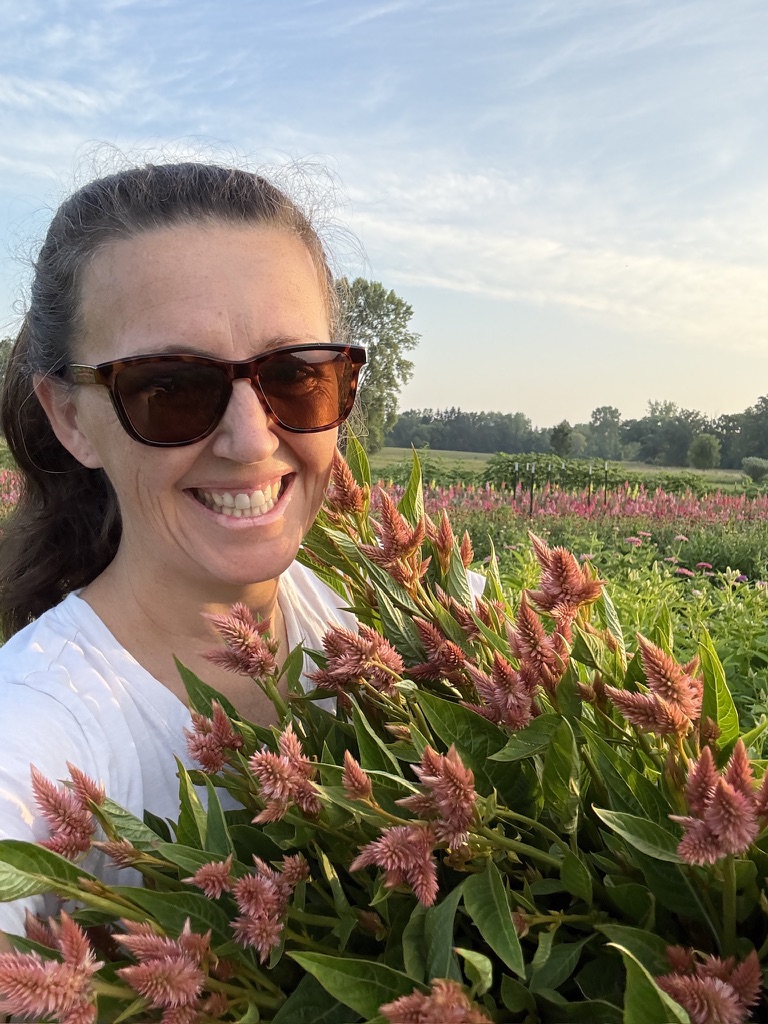
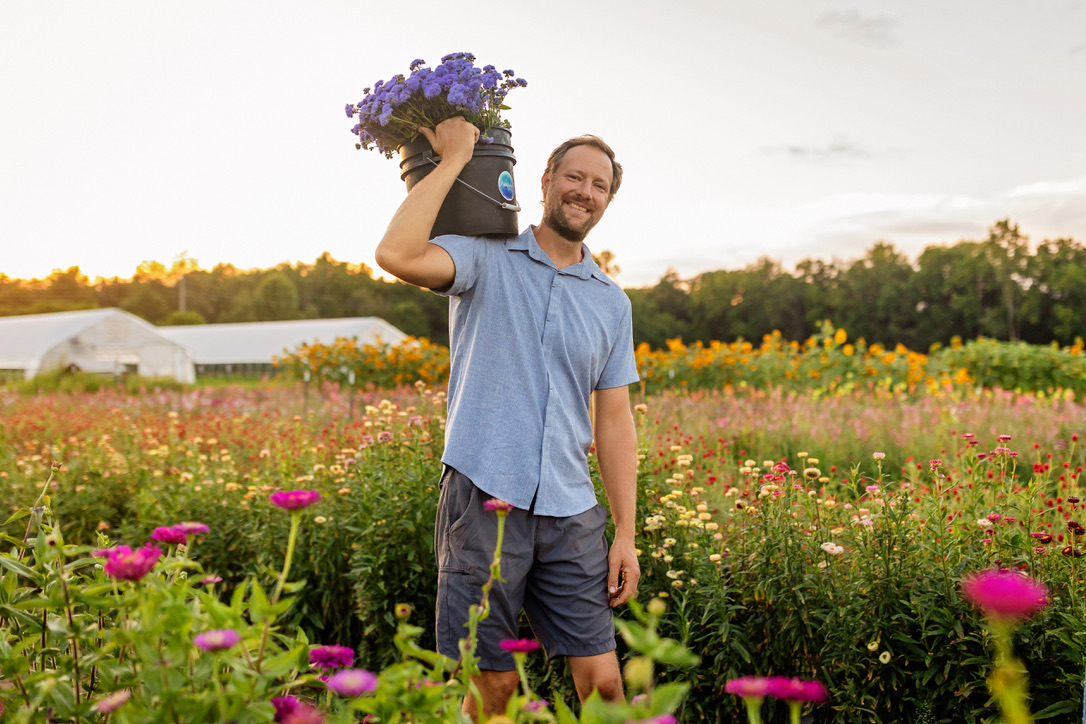
When Adam and I first said "I do" and moved to Ann Arbor in 2007, we heard about a local community garden project with plots for rent and signed up. That first year the weeds grew higher than the plants, but–to my total amazement–delicious vegetables hid in that jungle and made their way onto our plates.
That winter I read Barbara Kingsolver's Animal, Vegetable, Miracle, and was taken with the idea of growing our family's food and eating locally. I poured over seed catalogs and fell in love with the names of beans grown by Seed Savers Exchange. Armed with one trusty garden reference book, I seeded a flat of tomatoes in the windowsill and faithfully woke up 15 minutes early to water them with a baster every morning before work. I planted out our second season plot that spring and made friends with mulch. Everything grew! Tomatoes took over our kitchen in August.
Over the next decade I grew food as a gardener and worked professionally as a registered nurse at both St. Joe's Hospital and Michigan Medicine, but I became discouraged seeing the same folks repeatedly admitted to our unit with preventable diseases brought on by poor nutrition, stress, and lack of education about or time for exercise and wellness.
When the daffodils bloomed in 2012, our daughter was born. Our lives changed in ways large and small. Her birth brought me home to our community, to building deeper relationships and spending time outdoors. Her delight in the worms, weeds, and wind brought great joy and wonder for me, and made me look for new opportunities to share gardening with children and adults.
I dreamed about creating a farm where we could connect children and young people-- those just starting out in life-- with really nutritious food and the joy and peacefulness that comes with working outdoors side-by-side with others. When our youngest (at the time) child started school in 2017, I began the adventure toward doing this earth work, committing to building a sustainable farming business that serves our community.
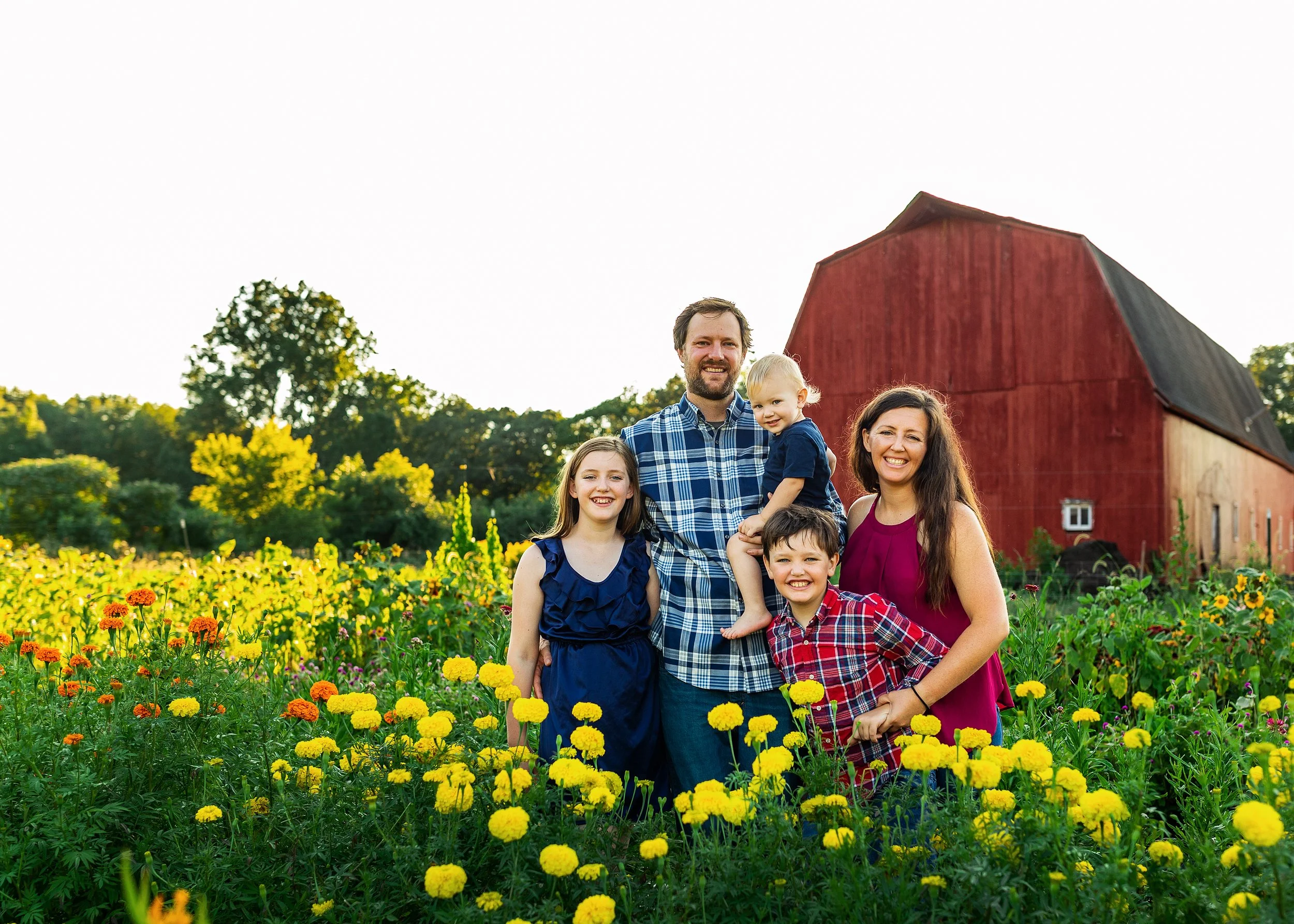
It’s 2026 and we are now eight years into working as land stewards. I've learned that small business owners wear many hats and develop diverse skillsets. I love the problem solving. I love connecting with the beautiful humans who are drawn to farms, community, music, beauty, nature. I love the creative opportunities. Most of all I love that I am doing work that I strongly believe in together with people I love.
The Land
In 2018 we became long-term stewards of one small corner of land stewarded by many before us— the Meskwahki asa hina, Peoria, Anishinabewaki, Potawatami peoples and then a series of immigrant families who homesteaded beginning in 1832. This land has seen many families struggle, work together, build up, tear down, gather, and fade away.
We want to be the gentlest caretakers we can be; we know our stewardship is only temporary.
We can create habitat for an abundance of biodiversity-- bees, monarchs, snakes, birds, toads, turtles, and earthworms. We can add important infrastructure to extend our growing season. We can offer hospitality to our community and do the important work of educating the next generation about sustainable agriculture and community building.
It is important to us to grow in the cleanest way possible because we know that our agricultural practices impact the soil we eat from, the air we breathe, and the water we drink. We decided to show a public commitment to sustainable practices by applying for organic certification as soon as we began farming in 2018. Accountability is important. By the power invested in Oregon Tilth, we were officially certified organic later that year.
We are working toward a sustainable future for our land for the long haul. When our family first explored this place in the spring of 2018, we discovered lilac bushes, mature mulberry and hickory nut trees, wild raspberries, a lone asparagus, peonies, and spaces rich with old livestock manure.
We are adding investments of time and love in the form of perennial vegetables, perennial cut flowers, fruit trees and brambles, ponds and wetlands, and comfortable spaces for people. We hope that whoever follows us on this land finds it bountiful and beautiful.
In 2024 we purchased a “forever farm” about a mile away from our original leased farmland because of the great work of the Greenbelt Program of the City of Ann Arbor.
This land is equal parts cleared farm field and sugar maple forest. We spent most of 2024 and the early part of 2025 moving much of our growing operation to this new land with loamy soil.
In 2025 I made the decision to stop certifying as organic. In my view, there are quite a few problems with this program. I now prefer to buy food from local farmers I trust, rather than rely on the certification label.
We continue to experiment with new crops, build infrastructure, raise our kids, and hold on tight for this wild ride of life. Thank you for following our story. These days I am mostly sharing photos and writing on Instagram, so feel free to keep reading there!


What We Value
I have a lot of doubt about the value of growing flowers in 2026, given the chaos in our nation this year. A friend responded to a post I made like this: “As a trauma therapist, I recommend rest, beauty and play as antidotes to trauma. As they say in Buddhism, 10,000 sorrows and 10,000 joys. It is both. Together they balance. The world is not only the sorrows, but if we don’t actively look for the joys we may not see them. The joys do not negate the sorrows, but help us move through them.”
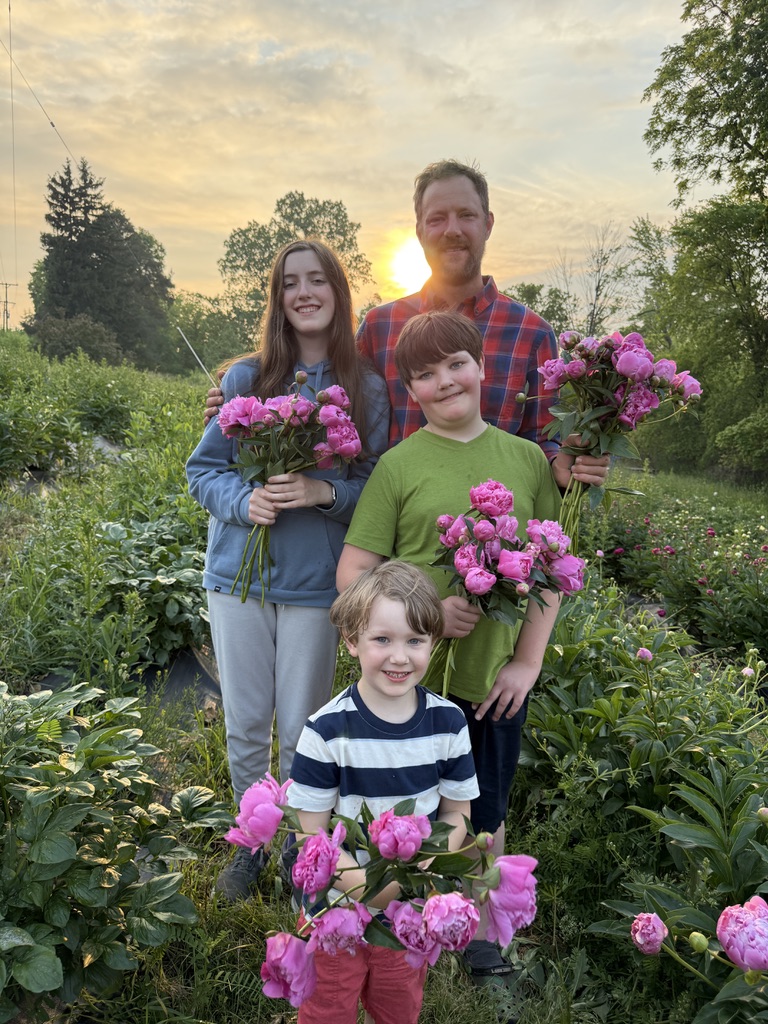
Life is full, mostly messy, sometimes hard, and deeply beautiful. Our little farm family of five is here on our tiny patch of Michigan ground, just trying to live out these values.
- Environmental sustainability. We chose the work of farming because of a desire to “do no harm” in our chosen career, and to, in fact, restore soil, air quality, and water quality through regenerative agriculture. We want to take our last breath knowing our life’s work left the land better than we found it for the generations that follow.
- Economic sustainability. To continue to farm we have to pay our bills and pay ourselves. With such a wide diversity of crops, we have learned to keep careful records of seeding, harvesting, and sales so that we can make data-driven farming decisions that eliminate waste and increase profitability.
- Diversity, equity, and inclusion. We actively seek to make space in agriculture and on our farm for people who are not America’s typical historic farmer demographic. We intentionally welcome women and our BIPOC and LGBTQ+ friends to our farm as employees, paid interns, CSA members, and customers.
- Great food. When we grow food, we work to grow the most nutritious food we can possibly grow and strive for the highest quality.
- Great beauty. We believe every soul can be uplifted by beauty and expansive views of nature. We create and host space on our farm for our community to encounter light, color, and joy outdoors.
- Generosity. We challenge the false narrative of scarcity. Facing the overwhelming abundance of nature, how can we do anything but share the gifts we receive? The possessions we own, in fact, own us, so we choose to give.
- Flexibility. Farming requires flexibility in the face of changing climate, seasonal weather conditions, crop abundance, crop failure, available labor, and shifting local markets. We are flexible and open-minded to reflect in each season and to adjust course, coaxing from the land what is needed in the community.
- Empathy. We strongly believe everyone is doing their best. We train our minds to believe the best about people, to look for the good in them, to affirm and build up where we can.
- Gratitude. We appreciate the many gifts we have received, the minds we have, the people who have loved us, the work we get to do. We verbally affirm others, write notes, stand in awe.
- Optimism. We believe that people are incredibly creative, are capable of great good, and are waiting for inspiration and accountability to do the most good together.
- Endurance. We know that life brings challenges again and again, and we are committed to remaining, to riding out the storms, to putting in the work, to doing the hard thing knowing that perseverance is often the prerequisite to gains in wisdom, character, love… and to great food and flowers.
- Humanity. We are human beings first and business people second. We see each person working on the farm as a full human being, and strive to ensure they get what they need from their time and work here each day.
Join Our Crew
Now Hiring for Our 2026 Season.